Monday, March 11, 2013

MoP Legendary Quest Guide: Updated for 5.2


MoP Legendary Quest Guide: Updated for 5.2

posted 53 minutes ago by perculia
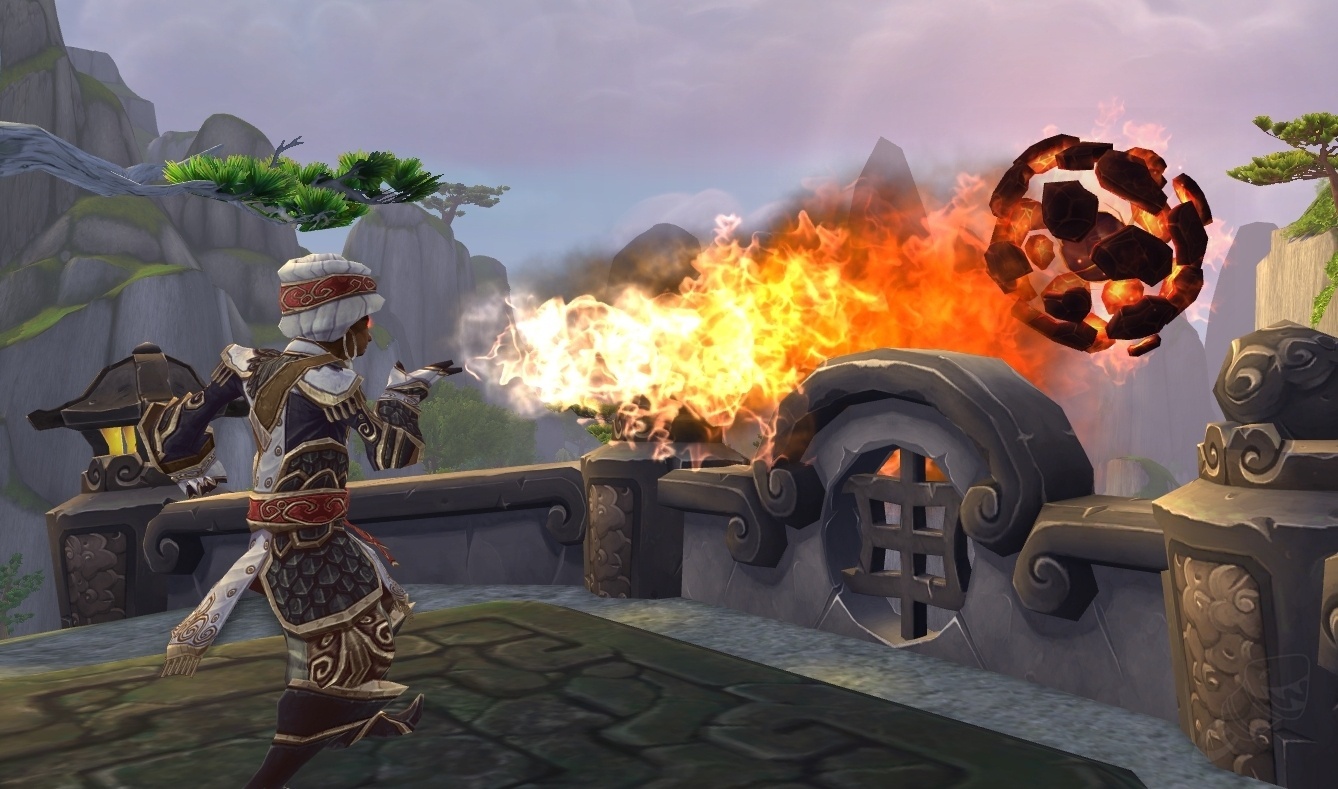
We've updated our guide to Mists of Pandaria's unique legendary questline with a summary of all the new quests and rewards found in Patch 5.2. Completing all the new steps will reward you with a legendary metagem and  Chapter III: Two Princes. The new gems are as follows: For the math inclined, Ghostcrawler explained proc rates and coefficients in a recent blue post.

This is a bit of a change from obtaining a Sha-Touched weapon in 5.0 and then enhancing it in 5.1, but as explained in our recent Blizzard dev interview, obtaining a weapon is an exciting moment in a new tier and making players constantly upgrade a Sha-Touched weapon would take away that fun. If you still really want a Sha-Touched weapon for either looks or stats, the droprate has been increased in LFR.

Click the cut to read our updated legendary guide for 5.2!

Table of Contents

Overview

  • All level 90 players in a raid can work on the legendary questline at the same time. it's been purposely designed to cut down on loot drama and the feeling that one person in your raid ends up overpowered.
  • This legendary series will span the expansion, with more elaborate rewards each tier.
  • The 5.0 reward is a +500 stat gem that can be placed into a special Sha-Touched weapon, of which there are versions on LFR, Normal, and Heroic difficulty. This gems only work in Sha-Touched weapons.
  • The 5.1 reward is an additional prismatic socket,  Eye of the Black Prince. This socket works on both Sha-Touched and 5.2 weapons.
  • The 5.2 reward is a legendary metagem, the Crown of Heaven.
  • If you are just becoming interested in the legendary questline now, you must start with the 5.0 part of the questline instead of jumping into the 5.2 section.

5.2 Quest Series

This part of the quest chain will send you into Throne of Thunder and the reward is a legendary meta gem. Here are all the new quests: There are two additional quests that we're unsure of their placement yet. We'll update when players reach this part of the chain:

5.1 Quest Series

This step encourages you to participate in the new faction hubs, and even PvP a little.

The reward is a  Eye of the Black Prince for your weapon. This is intended to work on weapons obtained in 5.2 as well.

5.0 Quest Series

NPCs in major cities in Pandaria will give you  Stranger in a Strange Land, a breadcrumb quest to deliver  Mysterious Note to Wrathion in The Veiled Stair. This is a small zone that can be reached by heading north of the Grassy Cline flightpoint inValley of the Four Winds.

You catch up with Wrathion and learn why he's in Pandaria with  A Legend in the Making.

You need to get to Honored with The Black Prince. On October 2, players started  The Strength of One's Foes in Mogu'shan Vaults. On October 30, Terrace of Endless Spring and Heart of Fear opened on normal difficulty. These are the instances that drop the Sha-Touched weapons (Mogu'shan Vaults does not).

Also starting on October 30, players continued on the questline with  Fear Itself: Defeat the Sha of Fear in the Terrace of Endless Spring and acquire the  Chimera of Fear.

 Breath of the Black Prince then rewards you with a choice of +500 stat gems:  Crystallized Horror,  Crystallized Dread, Crystallized Terror. These can be placed in the Sha-Touched weapons, which have versions on LFR, Normal, and Heroic difficulty. Getting another gem will cost you 10,000 from Blacktalon Quartermaster or Commander Oxheart. These gems cannot be placed in weapons from Throne of Thunder.

At this point, you'll be awarded  Chapter I: Trial of the Black Prince.

The quest series continues in 5.1 with  Incoming.... You have to do the introductory 5.1 chain in Krasarang Wilds starting with Meet the Scout /  Meet the Scout to have the naval fleet arrive.

Sha-Touched Weapon Models

These weapons only drop from Heart of Fear and Terrace of Endless Spring. Each difficulty tier has a unique color and they can all be transmogged. In addition, using a Shadow with  Jin'ya, Orb of the Waterspeaker or  Kri'tak, Imperial Scepter of the Swarm will give you a cute Sha-Fiend instead!

In Patch 5.2, the droprates of all items from LFR, including Sha-Touched weapons, has been greatly increased.

Video Preview

Rogue Perks

If you are a Rogue who has completed or worked on  Fangs of the Father, you get some fun flavor perks. Here are the Rogue-only dialogue options, from Whiterock's comment, when you initially speak to Wrathion:

Level 85-89 with Maw of Oblivion or Jaws of Retribution:
Hello again, <Name>, was it? Yes yes... I believe we left behind some unfinished business back in the Eastern Kingdoms. How you been finding Pandaria?

I have another assignment for you, if you are up to the challenge this time. I assure you the rewards will be worth it.

Before we begin, it's important that you familiarize yourself with the lay of the land. Come visit me once you have earned more experience here.
Level 85-89 with Fangs of the Father:
It is very good to see you again, <Name>! I trust the weapons I gave you at Ravenholdt have served you well?

I have another "assignment" for you here in Pandaria. This will again require all of your skills, and again I assure you... it will be worth it!

Before we begin, it's important that you familiarize yourself with the lay of the land. Come visit me once you have earned more experience here.
Level 90 with Fangs of the Father:
I am glad you have returned <Name>! I trust you are now acclimated to this strange new continent of Pandaria?

You have already proven yourself to me in the past, so we can dispense with any sort of tests or trials. Let's get right to it.

Are you ready to change the world?
If you have completed Fangs of the Father, you do not need to do  Trial of the Black Prince. You will get reputation automatically.

Sunday, March 10, 2013

Patch 5.2 Class Reviews – Part 4


Patch 5.2 Class Reviews – Part 4

Patch 5.2 Class Reviews – Part 4
This is the last part of our series discussing the class changes that are being implemented in patch 5.2. Stay up to date on all the incoming class changes by reviewing the 5.2 patch notes and reading the other parts of the series (also, you can skip straight to class changes if you’ve already read this introduction):
We don’t alter classes lightly, and every change comes only after a great deal of player feedback, developer thought and careful analysis. We also know that while class changes can help keep things fresh, they can also mean that there’s a need to re-learn things about your character that you thought you already knew. We want to make this process clearer, more understandable, and easier to adapt to as we move into patch 5.2, so I’ll be working with World of Warcraft Lead Systems Designer Greg “Ghostcrawler” Street to write a short blog series that will provide an overview of the important changes coming to each class.
Many of the 5.2 patch notes fall into two main categories: balance tuning and talent adjustments. Unless we called out a specific reason otherwise, you can assume that the various +10% or -10% adjustments you’ll see in the patch notes were made to keep all of the specs where we want them in 5.2. In some cases these are changes to reflect the different environment in 5.2 with new gear and set bonuses. In other cases, we are correcting issues we found in patch 5.1.
In terms of talent adjustments, while we’re still happy overall with the Mists of Pandaria talent overhaul, we do recognize that there were some talents that weren’t tuned as well as they could be or just weren’t attractive. That’s not to say that all talents should be all things to all players all the time; some talents are situationally quite attractive, and we’re happy with those. On the other hand, others just never see much use and we would rather provide players real options for each talent tier.
Note: The purpose of these blogs is mostly to provide an overview of the design intentions behind our 5.2 changes, rather than to detail the thought process behind every individual note. You can refer to the patch notes for specific changes and numbers.

ClassReview_WoW_Blog_DividerWarrior_GL_590x75.jpg
There were a few main goals to accomplish with Warriors:
  • As with all the classes, we wanted to make the less popular talents more attractive.
  • Despite a few nerfs, we felt that Arms was still too dominant in PvP and needed additional changes.
  • Because we changed Taste for Blood for Arms, this meant we also had to tweak that spec’s PvE rotation a little. We took the opportunity to improve the values of Haste and Mastery for Arms.
  • We wanted to remove Deadly Calm, because it was just adding to action bar bloat without adding much to gameplay.
Warrior talent diversity wasn’t too bad overall. It’s true that some talents have proven to be quite situational, but we still see them being used in those situations. We made some small buffs to Bladestorm, including preventing it from being countered by relatively short-cooldown disarms. We also buffed Storm Bolt outright and made Enraged Regeneration a little cheaper. Second Wind has garnered a lot of attention from the community, and it gets a lot of the blame for Warriors being so hard to kill in PvP. We’re still not entirely sure if Second Wind or Defensive Stance was more of the culprit there (more on this below). We tried some initial nerfs to Second Wind, but we were ultimately happier keeping the talent intact. It’s very popular in both PvE and PvP and if it continues to overshadow the other two talents, we’ll figure out what the best move is then.
Coming out of Cataclysm, we felt like we had reduced Warrior mobility too much in the name of balance, and in the process had removed what was always an iconic feature of the Warrior class. While we felt it necessary to adjust Warrior burst, survivability and control, we didn’t want to totally crush their mobility. To address burst, we re-designed Taste for Blood. Initially, we didn’t think that Taste for Blood would have significant PvP implications because it was so hard and unpredictable to build up stacks. Nevertheless, when it did happen, it felt like it couldn’t be countered. It was also so random that it wasn't the most compelling mechanic in the Arms PvE arsenal, so it didn’t feel like it was worth preserving. Instead, we redesigned Taste for Blood to no longer buff Heroic Strike. That alone was a useful burst damage adjustment, since Heroic Strike is off the global cooldown which allowed it to be stacked with other attacks, such as Overpower. We also removed Glyph of Death from Above damage buff to Heroic Leap, because it felt gratuitous; it’s still a good Glyph.
The second main PvP adjustment was to Warrior stun talents: Shockwave and Warbringer. The Warbringer stun now shares diminishing returns with non-proc stuns, but we attempted to compensate by giving it a snare as well. Meanwhile, Shockwave has a longer base cooldown, but will have a shorter cooldown if it hits multiple targets. We feel this rewards tactical and positional gameplay while still preserving an on-demand stun if it’s needed.
The third PvP nerf was to make it less attractive to sit in Defensive Stance all the time in PvP. Defensive Stance should be there when you’re getting trained, but its overly generous 25% damage reduction coupled with Arms not requiring Rage for so many attacks made Battle Stance un-competitive. We reduced the damage reduction for non-tanks and now ask Arms to use more Rage in their rotation to give Battle Stance a clearer role.
The change to Taste for Blood does have some PvE ramifications, but it also helps make the rotation less random overall. (Warriors who love unpredictable procs can try out Fury, which is intended to be more random.) We changed Sudden Death to activate from Mastery procs as well as auto attacks, and we improved the value of Haste for all warriors (though admittedly, this does not contribute to Protection’s active mitigation).
Finally, we concluded that Deadly Calm wasn’t providing compelling gameplay. Deadly Calm was an interesting button in Cataclysm, particularly when paired with set bonuses, but it didn’t mesh well with more active Rage management in Mists of Pandaria. Warriors already have a lot of damage cooldowns, and Deadly Calm was often macroed—even by skilled Warriors. Speaking of cooldowns, we also reduced both the effect and cooldown of Recklessness to give Warriors more frequent access to a damage cooldown while further reducing PvP burst.


ClassReview_WoW_Blog_DividerMonk_GL_590x75.jpg
It was time for Monks to get their first post-expansion revision. These were the goals:
  • As with all the classes, we made adjustments to make under-used talents more compelling.
  • Correct PvP under-tuning, particularly with Windwalkers.
  • Bring Windwalkers up to par in both PvE and PvP.
  • Offer Mistweavers a unique healer play style.
We saved the Monk changes for last. While a lot will be different for Monks in 5.2, this kind of evolution is to be expected after an entirely new class is introduced and put through its paces in a live environment. Still, while there are a lot of tweaks, there’s not much in the way of major overhauls and you won’t have to re-learn how to play your Monk.
We altered the way the whole level 30 set of talents works. Rather than being limited by resources, they’ll now fit into rotations on a cooldown basis. Previously, Chi Wave, Zen Sphere, and Chi Burst were too situational or simply used as fillers when no other abilities were available. Now that they are free but limited by cooldown, Monks can use them frequently as part of their core rotations without having to worry about other attacks dropping from the rotation.
We felt like Windwalkers didn’t have a signature ability to differentiate them from the other Monk specs, nor did they have a good tool to use when a cleave would be optimal, so we gave them Storm, Earth, and Fire (based on the Pandaren ability from Warcraft III).  We also changed the Windwalker Mastery from Combo Breaker to Bottled Fury, which increases the damage bonus provided by Tigereye Brew. This accomplishes the dual purpose of freeing up some global cooldowns (allowing Windwalkers to be more resource limited, and less GCD limited) and to provide some on-demand burst. The old Mastery, Combo Breaker, has become a passive ability granted early on in the leveling process. While we were concerned with burst damage at the beginning of the last season, we don’t want Windwalkers to have completely anemic burst either.
We didn’t want to recreate the balance problem we had when we introduced Death Knights during Wrath of the Lich King, but we ended up being too conservative. The result is that Monks haven’t been as well represented in PvP as we’d like. While we toned down the control of several other classes, we felt like we needed to give Monks some substantial buffs to make them more viable in PvP. To increase survivability, we added a new level 30 ability to Brewmasters and Windwalkers: Nimble Brew. Nimble Brew clears roots, stuns, and fear effects, reduces the duration of future such effects for a few seconds, and can be activated while stunned. We also created the powerful new Ring of Peace talent, and baked the old Deadly Reach talent it replaces directly into Paralysis.
Early on, we said that Mistweavers would have the option to be melee healers, dealing damage and healing their allies at the same time. We haven’t quite delivered on that, but in patch 5.2 we’re making an effort to allow “fist-weaving” to be a more viable play style. The actual healing provided by Fistweaving was okay, but Fistweaving damage was so low that it wasn’t worth it for Mistweavers to move to melee to try it out. With the 5.2 buffs, it should be. These changes prompted a few others to make sure that casting heals like a traditional healer and causing melee damage to heal were separate rotations, without allowing Monks to cherry pick the best moves from each, which caused balance problems in testing. The goal is for Fistweaving to be similar to Atonement healing for Discipline Priests. The Monk will sacrifice some DPS and healing compared to a dedicated healer or damage dealer, but it will be possible to contribute a good amount of each, which is sometimes quite valuable.
Brewmasters are seeing the fewest changes, and they’ve proven to be very capable tanks, though they do require a fair amount of skill to play. The level 30 talent changes will help spice up their rotation.

Patch 5.2 Class Reviews – Part 3


Patch 5.2 Class Reviews – Part 3

Patch 5.2 Class Reviews – Part 3
This is part 3 of the ongoing series discussing the class changes that are being implemented in patch 5.2. Stay up to date on all the incoming class changes by reviewing the 5.2 patch notes and reading the other parts of the series (also, you can skip straight to class changes if you’ve already read this introduction):
We don’t alter classes lightly, and every change comes only after a great deal of player feedback, developer thought and careful analysis. We also know that while class changes can help keep things fresh, they can also mean that there’s a need to re-learn things about your character that you thought you already knew. We want to make this process clearer, more understandable, and easier to adapt to as we move into patch 5.2, so I’ll be working with World of Warcraft Lead Systems Designer Greg “Ghostcrawler” Street to write a short blog series that will provide an overview of the important changes coming to each class.
Many of the 5.2 patch notes fall into two main categories: balance tuning and talent adjustments. Unless we called out a specific reason otherwise, you can assume that the various +10% or -10% adjustments you’ll see in the patch notes were made to keep all of the specs where we want them in 5.2. In some cases these are changes to reflect the different environment in 5.2 with new gear and set bonuses. In other cases, we are correcting issues we found in patch 5.1.
In terms of talent adjustments, while we’re still happy overall with the Mists of Pandaria talent overhaul, we do recognize that there were some talents that weren’t tuned as well as they could be or just weren’t attractive. That’s not to say that all talents should be all things to all players all the time; some talents are situationally quite attractive, and we’re happy with those. On the other hand, others just never see much use and we would rather provide players real options for each talent tier.
Note: The purpose of these blogs is mostly to provide an overview of the design intentions behind our 5.2 changes, rather than to detail the thought process behind every individual note. You can refer to the patch notes for specific changes and numbers.

ClassReview_WoW_Blog_DividerRogue_GL_590x75.jpg
We had a lot of work to do on the Rogue talent tree, probably the most of any class.
  • Rogues, historically a PvP mainstay, felt underpowered and weren’t well-represented in high-end PvP. We wanted to change that.
  • In PvE, we wanted to tone down the cleave capabilities of Combat so it didn’t feel like a mandatory spec for some fights.
  • We wanted to give Rogues a little more PvE utility instead of feeling quite so selfish.
While we tweaked several talents to make them more attractive, there were large-scale changes to two tiers. In an attempt to balance a perennial problem we’d had balancing Rogues in PvP, we initially asked them to choose between Preparation and Shadowstep. Forcing Rogues to choose between the two worked . . . so well that Rogues felt ineffective in PvP. While we tried to make it a trade-off between the defensive capabilities of Prep and the movement capabilities of Burst of Speed or Shadowstep, as with the Mage tree, we eventually came to the conclusion that only movement could compete with movement. We gave Prep to all Rogues, buffed Burst of Speed, and created a new talent, Cloak and Dagger to be part of the movement tier. Cloak and Dagger causes a Rogue to teleport to their target whenever they use an opener. Combined with dropping out of combat to re-stealth, Shadow Dance, and the Subterfuge talent, we expect that it can be used to accomplish some pretty interesting things.
Similarly, while Anticipation proved very popular in the level 90 tier, Versatility did not, and in fact, Anticipation felt like it provided the benefits of Versatility, only better. We retired Versatility and added a new talent, Marked for Death, which will mark a target and instantly generate 5 combo points on that target. When the target dies, the cooldown will reset.
In addition to giving Rogues Preparation baseline, we also wanted to increase Rogue burst in PvP. That may sound backwards given that we are often trying to reduce the burst of classes in PvP, but we think Rogues had the opposite problem, where their large component of passive damage from white attacks and poisons coupled with the low damage per hit of using a pair of small weapons meant that Rogues had significant issues closing the deal and taking an enemy down during a burst window. Our solution here was to allow Rogues to store up more energy in PvP through a new set bonus. This means a Rogue will have to work for their burst, but it will be there if they plan for it.
Blade Flurry has been an iconic spell for Combat for some time, and while we initially discussed just giving it to all Rogues, we thought Combat lost too much under that design. Ultimately, we like that Combat is good at cleaving. The problem was it was so good that it felt mandatory for many Rogues to switch to Combat for some fights. Ideally, a Rogue who prefers Assassination or Subtlety should be able to stick with that spec, knowing they might fall a little behind on cleave situations, but can make up for it in other situations. We changed the way that Blade Flurry works, so that it will strike more targets for less damage. Combat will still be the best choice for AoE fights, but not so much so that it will be at an overwhelming advantage. We’ll be increasing Combat single-target damage via an increase to Vitality to compensate. Overall, we hope that most players will feel comfortable sticking with the spec they are most comfortable playing without feeling compelled to swap between fights. Subtlety will see increased single-target damage via an increase to the effects of Sanguinary Vein.
PvE utility is very subjective. Some players equate it with a raid-wide damage reduction cooldown, while for others, the utility has to be something unique that nobody else can provide. We add that caveat just because we don’t think the community will ever agree on who brings “enough” or “the best” utility. The change we made for Rogues was simple: Smoke Bomb now provides damage reduction, so in a similar fashion to abilities like Rallying Cry, a Rogue can help survive against, oh say, just for example, the damage a huge freakin’ dinosaur can dish out.

ClassReview_WoW_Blog_DividerShaman_GL_590x75.jpg
We had a few goals with Shaman:
  • As with the other classes, we wanted to make unattractive talents more appealing. Shaman had a similar problem to Druids, where certain choices were perceived as good for e.g. Elemental but not Restoration.
  • We wanted to buff Elemental dispel vulnerability and overall survivability in PvP.
  • We wanted to give Enhancement a very slight boost for PvP.
  • We also wanted to improve Elemental’s target switching and multi-target damage in PvE.
  • We adjusted some Glyphs, some because they were too good, others because they felt mandatory.
We made several adjustments to talents to broaden their appeal. For example, Ancestral Swiftness now provides 10% melee haste in order for Enhancement Shaman to take it more seriously as an option, while staying at 5% spell haste since Restoration Shaman already liked the talent.
For PvP, we gave Shamanistic Rage to Elementals to provide a defensive cooldown they could use when focused. We also changed the interaction between Flame Shock and Lava Burst. Lava Burst still does more damage when Flame Shock is present, but it will now do more damage than it did previously, even when Flame Shock isn’t on the target. Therefore, if Flame Shock is dispelled, Elemental does less damage but doesn’t feel completely crippled.
This same change helped with Elemental’s target switching in PvE, since they didn’t have to wait for Flame Shock to come off cooldown every time they wanted to do something like burst down a new add. We also felt that Elemental never had a great chance to shine in 5.0 raiding. Their damage was on target for most fights, but other specs with whom they were tied would do great in some situations, such as multi-dot fights. We decided that “chains” are one of a Shaman’s core mechanics, so we wanted to make sure Chain Lightning delivered when the player was in a situation where they could use it. Chain Lightning damage no longer decreases when hitting subsequent targets, and actually increases when converted to Lava Beam.
We wanted to buff Enhancement for PvP in two ways. First, we increased the mana generation of Mental Quickness, since Enhancement suffered from mana problems when they didn’t have high uptime on the target, a common occurrence in PvP. We also lowered the cooldown on Spirit Walk to further increase their up time as well as giving them more frequent escape tools.
Finally, on the Glyph front, Purge is an extremely powerful tool in PvP, especially when Glyphed, so we added a 6 second cooldown on the ability if the Glyph is applied. It’s still powerful and useful, but less spammable. On the other hand, the Glyph of Flame Shock felt mandatory, so its effects have been made baseline.

ClassReview_WoW_Blog_DividerWarlock_GL_590x75.jpg
Our main goals for Warlocks:
  • As with all classes, we wanted to tweak talents to make underused talents more appealing.
  • Fix Blood Fear.
  • Put the pet back in Warlock.
  • Roll mandatory-feeling Glyphs into the relevant specs.
We feel Warlocks are, generally speaking, in a pretty good place right now. Obviously they received many changes in 5.0 and we’re still iterating on a few of those new mechanics to get them to feel quite right. Warlock talents weren’t in a bad place overall. We made a few tweaks such as Burning Rush also offering snare “resistance”, and Kil’jaeden’s Cunning no longer having an active / passive mechanic.
In PvP we saw that Blood Fear, intended to be used defensively, was increasingly seeing use as an offensive ability. We also felt that it was a bit too effective. To adjust it some, as well as return it to its more defensive roots, the old talent has been removed, and its new replacement, Blood Horror, applies a buff to the Warlock that will fear enemies that strike her in melee.
Warlocks are meant to be a pet class, but a lot of locks were choosing Grimoire of Sacrifice. We understand that players have a tendency toward the most powerful and efficient play style, and that managing a pet takes a little effort. Pets are a big part of what it means to be a Warlock though, so while we don’t mind offering GoSac so that there’s some play style diversity, we wanted to de-emphasize petless play. Now sacrificing your fel friend, while still an option, won’t be quite as much of a damage bump as it was in the past. In addition, too many locks felt like they had to use the imp in PvE, especially in smaller groups, in order to benefit from Blood Pact. We just added the Stamina bonus to Dark Intent to let the player choose whether an imp or another demon made more sense depending on their preference and the situation.
Both Glyph of Embers and Glyph of Soul Shards really felt like they should be baseline, and had become essential to their respective specs. We made the original Glyph effects baseline, and added new Glyph effects that should be helpful, without feeling like they’re absolutely required. We also changed the Glyph of Unstable Affliction so players didn’t feel like they had to choose between the silence and the damage backlash.